Do I need vitamins for life after bariatric surgery?
Written by Dato' Dr Tikfu Gee, MBBS, MS (Surgery), Fellowship in MIS (France)
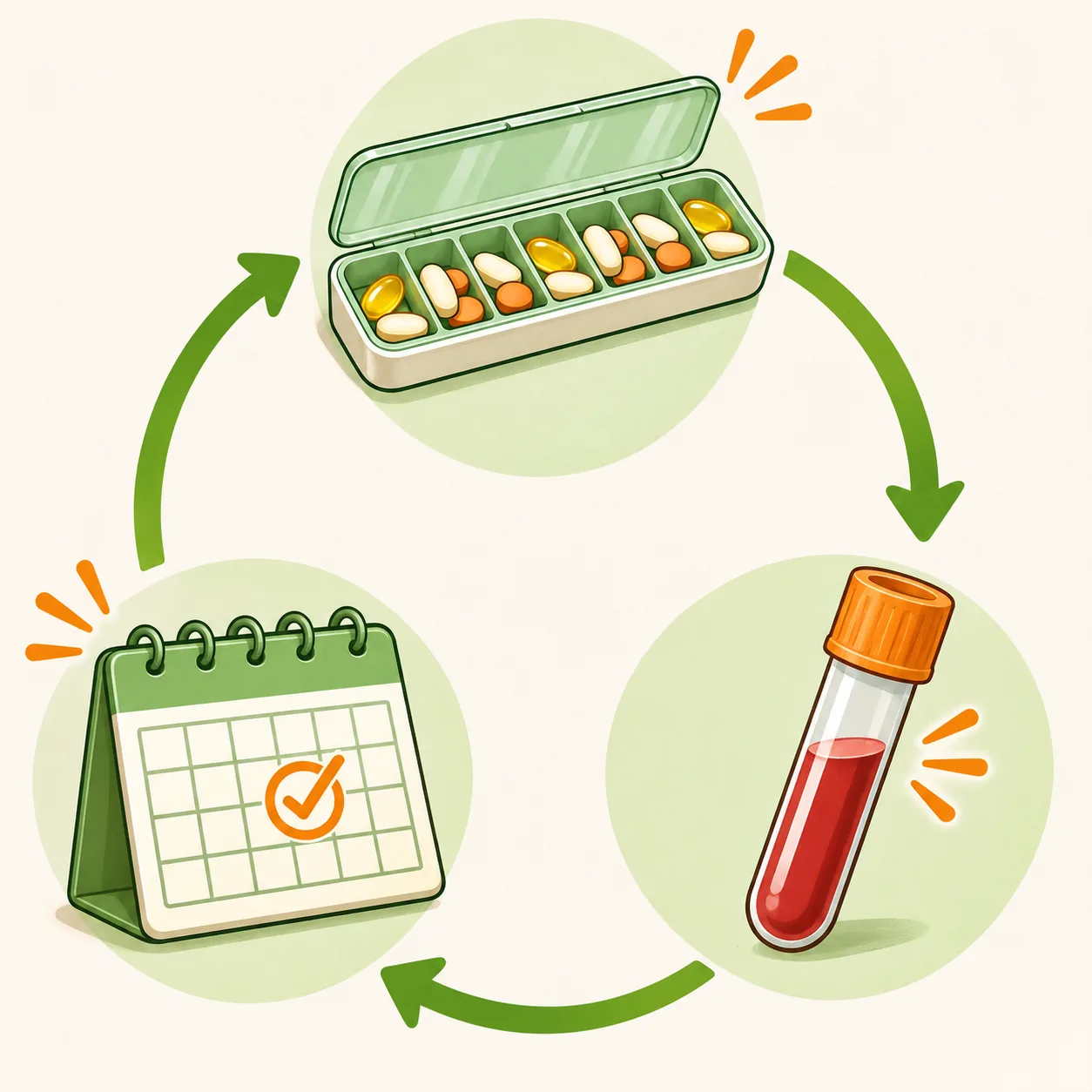
Yes. After bariatric surgery the body takes in fewer vitamins and minerals, because you eat less and, after some operations, absorb less. Daily supplements and regular blood tests are needed for life to prevent anaemia, weak bones and nerve damage [13].
Key points
- Supplements are part of the treatment, not an optional extra.
- Shortages can build up silently over months or years.
- Blood tests find problems early, before symptoms.
- Do not stop supplements because you feel well.
Which vitamins and minerals are usually needed?
Exact products and doses are set by your team.
| Nutrient | Why it matters | What a shortage can cause |
|---|---|---|
| Multivitamin with minerals | Covers many small needs, including folic acid, zinc and copper | Tiredness, hair loss, poor healing |
| Iron | Makes red blood cells | Anaemia: tiredness, breathlessness, pale skin |
| Vitamin B12 | Nerves and blood | Numbness, tingling, memory problems, anaemia |
| Calcium with vitamin D | Bones and teeth | Weak bones, fractures |
| Vitamin B1 (thiamine) | Nerves and brain | Confusion, unsteadiness, eye problems. Urgent if you have been vomiting for days |
The list follows the British guideline on nutrition after bariatric surgery [13]. Needs are higher after bypass-type operations than after a sleeve.
How often are blood tests needed?
Usually several times in the first year, then at least once a year for life [13]. Your team sets the exact schedule. Tests commonly include blood count, iron stores, vitamin B12, folate, vitamin D, calcium and kidney and liver function.
Tips for remembering
- Link supplements to something you already do every day, such as brushing your teeth.
- Use a weekly pill box.
- Iron and calcium are usually taken at different times of day, because calcium blocks iron.
- Tell every doctor and pharmacist that you have had bariatric surgery.

When should I see a doctor about a possible shortage?
See a doctor if you notice unusual tiredness, breathlessness, numbness or tingling in the hands or feet, unsteady walking, a sore tongue, or heavy hair loss that continues beyond the first year.
Urgent
Vomiting that goes on for more than a few days, with confusion, double vision or unsteadiness, needs emergency care. It can be a sign of severe vitamin B1 shortage.
Want more detail?
- The British Obesity and Metabolic Surgery Society guideline sets out blood tests before surgery, monitoring afterwards, and replacement of iron, vitamin B12, folic acid, calcium, vitamin D, thiamine, zinc, copper and other nutrients [13].
- Hair loss after surgery has been linked to low zinc, folic acid and iron stores in pooled studies [14].